

Colgate University continues to walk the talk on climate leadership. As a proud partner and friend of the Finger Lakes Climate Fund (FLCF), Colgate has once again demonstrated its commitment to community-based sustainability by making another $3,000 carbon offset donation. This ongoing partnership shows Colgate’s role in the higher education sustainability movement. In 2008, the University joined the American College and University Presidents’ Climate Commitment (ACUPCC), now part of the Climate Leadership Commitment, and pledged to achieve carbon neutrality. Just over a decade later, in 2019, Colgate became the first institution of higher education in New York State to reach that goal. The journey began with accountability. A 2009 greenhouse gas inventory revealed a baseline footprint of 17,393 metric tons of CO₂. Over the years, Colgate reduced its campus carbon footprint by over 50 percent. Yet Colgate knows carbon neutrality was only a milestone. As the University continues to push toward decarbonization and zero emissions, it maintains its carbon-neutral status by investing in high-quality carbon offsets that align with its values, just like the Finger Lakes Climate Fund. Colgate’s donation will directly support local families in Madison County, including those in Hamilton, where the University is located. These funds help income-eligible homeowners access the resources they need to complete energy-efficient home upgrades, improving indoor comfort while reducing household carbon footprints. Past donations have already made immediate differences by funding new insulation, weatherization, and heating improvements for residents across the region. Thanks to Colgate’s latest contribution, we’re excited to begin identifying the next round of Madison County households that could benefit from a cleaner, greener, and more energy-efficient home. Thank you, Colgate University, for demonstrating that carbon neutrality doesn’t stop at the campus gates.
Author: Emily La
Two Goats Brewing

Nestled in a restored 1800s barn on a picturesque hillside in Burdett, New York, Two Goats Brewing offers stunning views of Seneca Lake. It’s the perfect spot to savor a refreshing beer brewed on-site and enjoy their signature beef-on-weck sandwich, made with naturally raised, local meat. Since Jon and Jess Rodgers opened Two Goats in 2010, they’ve embraced the core values of people, planet, and prosperity in everything they do. Powered primarily by geothermal and solar energy, Two Goats goes the extra mile to reduce its environmental footprint by composting, reusing, and recycling everything they can. They also make it a priority to source local and ethically produced ingredients, strengthening the local economy while crafting great beer. Two Goats Brewing is a true gem in Schuyler County—a place where everyone can enjoy breathtaking lakeside beauty (with spectacular sunsets!) and live music with friends, all while supporting a business committed to sustainability. Now, they’re adding another feather to their cap as a proud member of FLECA!
A carbon offset program helping the environment and social justice in Upstate New York
Are you concerned about your carbon footprint? Well, what if you could make up for some of the emissions you generate through travel or heating your home or a business practice that burns fossil fuels. That’s where carbon offsets come in. And one organization in Upstate New York is using those carbon offset payments to help the planet, while helping low- and moderate-income households improve their energy impact and their comfort.
On this episode of Deeper Shade of Green, the Finger Lakes Climate Fund. The group Sustainable Finger Lakes created the program to help people install energy efficient and fossil fuel-free heating, cooling and other home upgrades. Co-founder and President Gay Nicholson and Outreach Coordinator Emily La explain the fund and how carbon offsets work. They also share how it allows families to participate in the important work to mitigate the climate crisis who might not have been able to participate on their own. the discussion also includes how climate change is affecting the Finger lakes region, as well as land-use concerns in an area that could well become a climate migration destination.
Deeper Shade of Green is produced with the assistance of Hector Perez for research and booking. Our music is from the Syracuse-based jazz group E.S.P.
Sustainability Week 2025 plants the seed of environmental action in campus community

(The Ithacan, 04-27-25, by Sadie Evans)
Ithaca College hosted Sustainability Week 2025 from April 16-26. Throughout the week, there were different events including a sustainability fair, a talk with a local climate leader, a student-led colloquium, pancakes in the IC Natural Lands and clothing sales.
At the sustainability fair, different campus and community organizations showcased their work at tables that spanned the length of Textor Hall. Some of the organizations included Recycling and Materials Management of Tompkins County, Finger Lakes Climate Fund, South Hill Forest Products and Backyard Flea. Not only did they educate the campus on their specialties, but they also had raffles and products for sale.
Scott Doyle, director of Energy Management and Sustainability at the college, said that getting people involved at a community level is a step toward positive change, and the sustainability fair has a way of bringing people from different backgrounds together.
“I helped [plan] the sustainability fair for the past two years, and it’s really fun,” Doyle said. “It’s a nice way to promote some of the stuff for the week. … We always get some good ideas talking to a community group that’s here or [a speaker] we set up.”
Doyle said Sustainability Week revolved heavily around student involvement, from conducting the student-led panel, presenting at the student work colloquium and tabling the sustainability fair.
Senior Julia Freitor tabled for South Hill Forest Products at the sustainability fair and its open house. This student-led company is run by the class, Farming the Forest: Non-Timber Forest Products. Everything at the open house, held April 26 in the Ithaca College Natural Lands, is produced and hand-crafted by the students in the class. A non-timber forest product are products that are not pulp or paper, lumber or composite materials.
“I’m really proud of how much I’ve made for this open house,” Freitor said. “I learned to carve my own utensils out of wood, I got to learn how to make bark baskets, … and I designed stickers for the open house. … I just tried to get as hands-on as possible.”
Apart from student-led activities, Doyle said the college hosted professional advocates for renewable energy and local sustainability in hopes of inspiring and encouraging students and faculty to create a greener future.
Terry Carroll, chief sustainability officer for Tompkins County, was the keynote speaker for Sustainability Week. On April 24, Carroll presented “Sustainable Detours and Destinations: My Experience and the Road Ahead for Municipalities.” The presentation talked about his non-linear career path to becoming a renewable energy advocate and his role in managing the Tompkins County Green Fleet Program, where he is in charge of two hundred government-owned electric vehicles in Tompkins County.
“I oversee our vision for the community at large,” Carroll said. “We look at what programs we can do to help the community decarbonize, reduce their greenhouse gas emissions and … work on those individual programs.”
During the talk, Carroll said clean energy was powering 40% of global electricity in 2024, and despite any worries people may have about charging their vehicles, he has hope for them in the coming years.
“There’s more people today saying that their next vehicle is going to be electric than there’s ever been before,” Carroll said. “And even though we’ve seen some issues surrounding tariffs and uncertainty around incentives, you can see this trend line yet again increasing … how many [electric vehicles] are sold year over year.”
Michael Smith, professor in the Department of History, was an audience member at this event. During the Q&A, Smith said he is a big advocate of reducing motorized vehicles in general, even electric ones.
“I ride my bike almost exclusively as a way of commuting year-round unless there’s snow on the road,” Smith said. “There’s still so many side effects of automobility in terms of road construction and runoff and other issues. [It’s] not just emissions that make cars bad.”
Carroll’s talk raised questions on how communities can work to create more eco-friendly transportation systems and discussed how Tompkins County can be a leading municipality in sustainability, especially as a silver-certified climate-smart community.
Carroll said implementations alone are not enough and the best way to pave a greener future is to bring the topic of sustainability into everyday conversations, both on local and national levels.
“A lot of the efforts that we’re doing are great, but if no one knows about them, it doesn’t really mean anything in the long run,” Carroll said. “Our hope is to really inspire change by not only walking the walk but also talking the talk.”
The week provided a series of successful events that got people interested in discussing the climate of our planet and the importance of renewable energy sources. Doyle said he believes the success of conservation comes from the collaborative efforts of, from climate leaders, students, faculty and community members.
“[Local sustainability] is bigger than any individual or any individual entity,” Doyle said. “ I think what this whole sustainability week is about is this connection of the community to celebrate the things we’re doing, but also good ideas for how to improve [things].”
‘Together for Tomorrow’: Earth Day Festival Returns to Ithaca
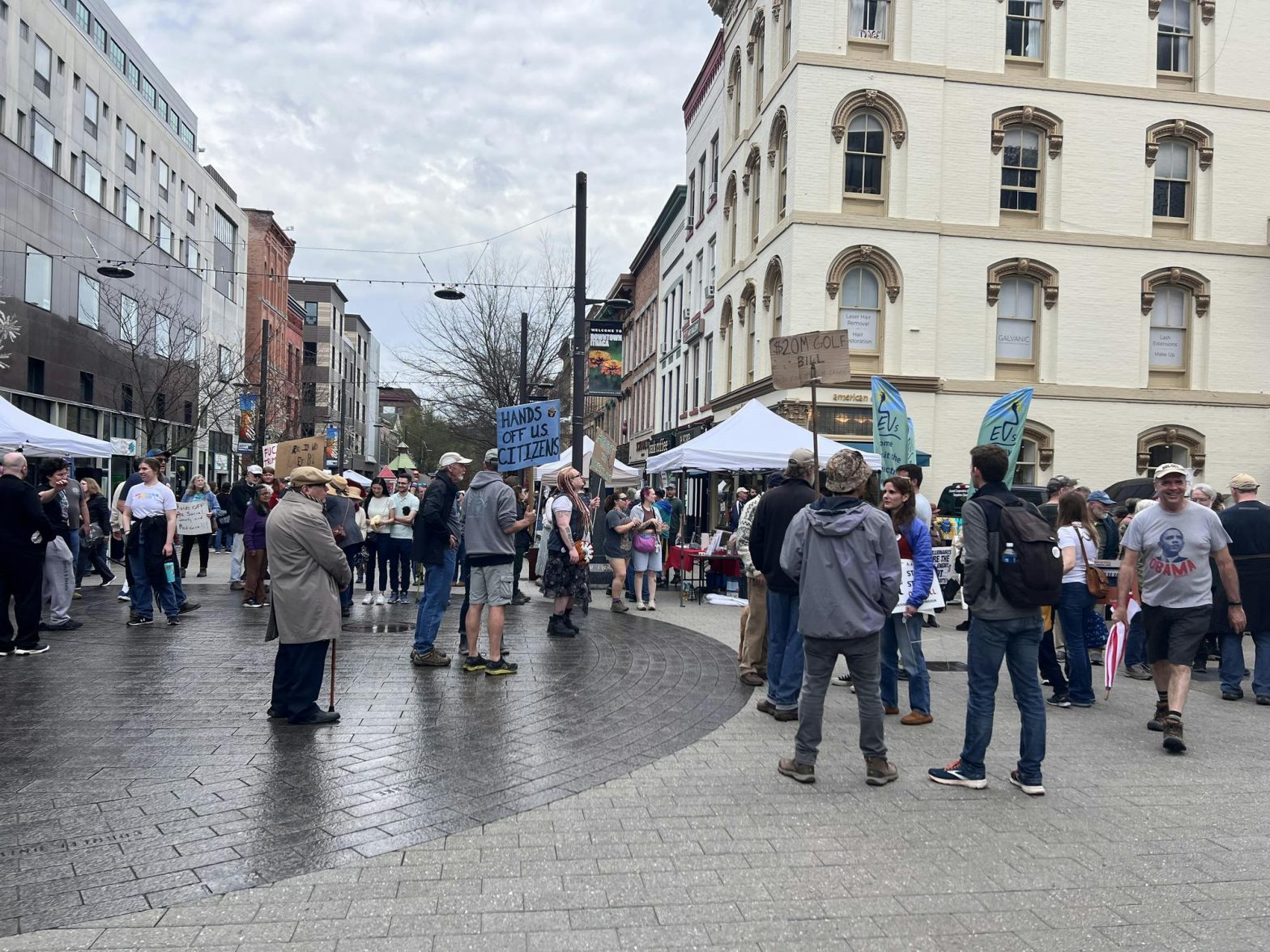
Xavier Rolston, The Cornell Daily Sun, Apr 21, 2025 Read the full article here. One of the interns for Sustainable Finger Lakes, Nicole Collins, Cornell ’25, tabled at the Ithaca Earth Day Event. Nicole discussed the organization’s initiatives, such as the Finger Lakes Climate Fund. “If someone, say, goes on vacation and travels in an airplane, they can give a carbon offset to our organization,” Collins said. “This is really unique because it’s local, and you can see the impacts, and put your carbon offsets into your own community.”
Mobile home heat pump pilot program aims to improve energy efficiency

A new Ithaca pilot program is helping mobile home residents reduce energy bills, improve home comfort, and transition to clean heating with high-efficiency heat pumps. Mobile homes typically use more energy than site-built housing and often rely on costly fuels like propane or electric resistance heating. As a result, many residents—especially seniors and low-income households—face a high energy burden, spending a disproportionate share of income on utilities.
These households include seniors, retirees, and immigrant families – notably members of the Karen refugee community in Dryden. This Ithaca pilot program directly targets these challenges by installing electric heat pumps, which provide both heating and cooling with significantly greater efficiency.
Louise Buck

Louise Buck, pictured with her two granddaughters, has been enjoying more time to visit family as she approaches retirement. Following recent travels to Norfolk, Boulder and Oakland, she turned to the Finger Lakes Climate Fund (FLCF) to offset the carbon footprint of her journeys. Louise has dedicated her career at Cornell’s Department of Natural Resources and Environment and EcoAgriculture Partners to promoting sustainability, which often required international travel. She particularly values the FLCF for connecting carbon offset payments to verifiable local benefits. Louise admires the collaborative leadership that Sustainable Finger Lakes demonstrates in designing and operating the FLCF to help meet these goals to promote energy efficiency, foster a green economy, and achieve ambitious climate goals for the region and beyond. “It’s not simple to coordinate the many elements of a successful offset program, from calculating emissions to raising funds and administering grants across numerous sectors and partners in transparent, credible ways.” Louise shares, “Many organizations have not been successful at it. Undoubtedly, the FLCF’s focus on helping local people contributes to its success, in addition to its collective vision and diverse and dedicated expertise”. These qualities: transparency, credibility, and a strong focus on the local community fuel Louise’s enthusiasm for participating in the program. She is glad that staying connected to her grandchildren in far-away California also gives her the opportunity to participate in and promote the FLCF.
Home energy grants awarded to Newfield family

(Tompkins Weekly, 11-6-24, by Kevin L. Smith)
James Dannic has lived in the town of Newfield his entire life.
Dannic has lived in a mobile home with his son for the past three years. The home, however, gets too cold in the winter and too hot in the summer for the Dannics.

Dannic uses propane to help heat his home, but it doesn’t do much to keep him and his son warm.
“While our fuel bills are predictable, it’s pretty high,” Dannic said. “You could smell it [the propane] all winter.”
Dannic decided to take action for a more comfortable living situation. It led to him receiving $1,925 from the Sustainable Finger Lakes (SFLX) Climate Fund to offset carbon emissions, and $5,500 from SFLX’s Tompkins Community Recovery Fund to install an air source heat pump in the Dannics’ home.
SFLX gave Dannic the organization’s 100th grant award. The other funding source also included Halco Energy, which has been tasked with installing Dannic’s new heat pump.
“We’re highlighting James and his family and also wanted to celebrate [the 100th grant] because it’s quite a milestone for local carbon offset funding,” said SFLX President Gay Nicholson. “We might be the oldest local carbon offset funding source now in the country.”
Since 2010, SFLX has offered climate grant funding to low-income families to help undertake critical energy efficiency upgrades, including insulation, air sealing and installing energy-efficient heating systems.
“The Finger Lakes Climate Fund has made a truly positive impact on our region,” said Katie Borgella, Tompkins County commissioner of planning and sustainability. “Utilizing carbon offsets to fund clean energy grants for residents and support local contractors and installers contributes to not only our greenhouse gas emission goals, but [contributes] to energy affordability and a robust local economy, as well. Both urban and rural communities in the Finger Lakes have access to this program. As a Newfield resident, I’m proud to see that the 100th grant went to support people living in my community. I’m glad to contribute to this program and see all the ways that Tompkins County and the Finger Lakes region are leaders in sustainability.”
SFLX noted in a release that the upgrades “not only help families save on energy costs but also contribute to significant reductions in greenhouse gas emissions.”
Once Halco Energy completes the repairs, Dannic is looking forward to lower costs.
“I’m also looking forward to my son breathing easier,” Dannic said.
SFLX’s climate fund program has awarded grants in 14 different counties in the Finger Lakes region. It has resulted in almost 10,000 tons of carbon emissions offset and more than $175,000 invested back into communities.
“I designed our climate fund to be transparent and hyper local and to share the stories of people being helped so people know when others take responsibility for their carbon emissions,” Nicholson said. “They know where it’s going and that it helps out local families. It helps out our green collar energy workers and our local installers.”
The community recovery fund, which is attached to the Tompkins County Mobile Home Energy Upgrades project, helps to install heat pumps to significantly improve “the health, safety, comfort and affordability” of the specific residences, the release said.
Nicholson said that when mobile homes across the country switch to heat pumps, the lifetime cost savings reach over $20,000.
“[The program] is really critical, especially for senior citizens or babies that are out there in the mobile homes,” Nicholson said. “They’re very poorly insulated. We insisted they be brought up to the best insulation standard you can achieve before you put the heap pump in.”
The Dannic family is now part of a long list of Newfield-based families and organizations that have received climate funding from SFLX. That list includes Second Wind Cottages, Adam Miner, the late Becca Harber, Daniel Fenner, Megan Cosgrove and more.
A total of $17,693 in climate fund grants has been awarded in Newfield. SFLX noted that 24 town residents have donated money to the program, with Newfield resident Kitty Gifford providing 18 donations.
“Kitty used to be on our board of directors before she went back to school to get her master’s degree,” Nicholson said. “It’s been a wonderful gift for Kitty to give back to her community. It’s her way of helping low-income families right in Newfield.”
Nicholson is encouraging people from communities in the Finger Lakes region to either sign up for climate funding or consider donating, while also addressing social and environmental needs.
“It’s all about participating in helping others to make our community better and the need to reduce carbon emissions as a result,” Nicholson said.
Newfield Notes appears every week in Tompkins Weekly. Send story ideas to editorial@vizellamedia.com.
Dailey Electric

Established in 1985, Dailey Electric has been proudly locally owned and operated since 2006. Specializing in a full range of services including plumbing, HVAC, electrical work, and now geothermal installations, they are a trusted name in the region. As an accredited business and a member of the GroundUp Geothermal Alliance of Western New York, Dailey Electric is committed to advancing sustainable energy solutions. Owned and operated by Leah and Ryan Dailey, this family business was a key installation partner for the HeatSmart program. They are experts in ground source (geothermal) heat pumps and also offer air source heat pumps, heat pump water heaters, as well as comprehensive plumbing and electrical services. Whether for new construction, remodeling, or retrofits, Dailey Electric provides specialized geothermal, HVAC, and electrical installations tailored to your needs. Their specialization in geothermal is also their commitment to sustainability. Geothermal energy is a renewable resource that helps conserve natural resources while saving homeowners significantly on heating and cooling costs. According to the U.S. Environmental Protection Agency, geothermal systems can reduce heating expenses by 30–70% and cooling costs by 20–50% compared to conventional systems. These systems are not only highly efficient but also require minimal maintenance and are designed to last for decades, making them a reliable, year-round solution for home temperature control. We’re thrilled to welcome Dailey Electric as a renewed partner in the Finger Lakes Enterprises for Climate Action (FLECA), where their dedication to sustainable energy continues to make a positive impact in our community.
Electrification: Tech conference regarding electrifying homes and buildings in the Low-to-Moderate Income market

On September 20, 2024, New York State’s Department of Public Service (DPS), as part of the NYSERDA Clean Energy Events, hosted a conference in Albany to discuss the electrification of homes and buildings in the low-to-moderate income (LMI) market segment. The conference was held in response to the Public Service Commission’s (PSC) Order on July 20, 2023, which directed the development of energy efficiency and building electrification proposals. This order is part of a statewide effort to transition away from fossil fuels, aiming to reduce greenhouse gas emissions and improve energy efficiency. The proposals, submitted by NYSERDA and New York’s major electric and gas utilities on November 1, 2023, focus on the years 2026 to 2030. They prioritize funding for the electrification of space and water heating in New York’s building stock, with a particular focus on the LMI market, as these communities are most at risk in the energy transition. The DPS aims to explore several key areas for developing an LMI energy efficiency and electrification strategy, including energy affordability, consumer protections, funding opportunities, and customer outreach and education. Gay Nicholson, President of Sustainable Finger Lakes (SFLX), was invited to participate in the morning panel with other front-line providers to share insights from their work helping LMI families make the transition to clean energy in both single family and multi-family settings. The panelists were asked to describe their programs and share insights including barriers and recommendations for advancing the electrification of LMI housing in NYS. Dr. Nicholson focused on the mobile home pilot project that is supported by a grant from the Tompkins County Recovery Fund. The project aims to retrofit 50 mobile homes with envelope improvements and heat pumps, targeting households earning below 300% of the federal poverty level. Tompkins County has over 4,000 mobile homes, predominantly in rural areas, housing a vulnerable LMI population, including seniors, young families, and immigrants. These homes are especially at risk for heat stress due to poor insulation. Through partnerships with county government, the Mobile Home Task Force, local agencies, and area installers, the project has successfully enrolled 78 households, completed 21 installations, and has 28 more in progress. Partner Contributions Other key partners of SFLX also presented at the conference on the afternoon panel on priorities for LMI electrification policy, strategy, and programs, including Lisa Marshall, Hal Smith, and Lindsay Speer. Lisa Marshall is the Advocacy and Organizing Director for New Yorkers for Clean Power (NYCP), and formerly the Program Director of HeatSmart Tompkins. Under her leadership, HeatSmart Tompkins doubled program participation and increased the adoption of heat pumps in LMI households. A long-time advocate for building decarbonization, Lisa has been active in promoting equitable building electrification through education, lobbying, and grassroots campaigns. As an individual, she has also contributed to our Finger Lakes Climate Fund to offset her carbon footprint. Hal Smith is the owner of Halco Energy, which offers energy services, including installing clean renewable energy systems. Halco, known for their commitment to sustainability, has been a key partner of Sustainable Finger Lakes, especially in completing 90% of the retrofits in the mobile home pilot project. Halco was also the first member of the Finger Lakes Enterprises for Climate Action (FLECA) and recently renewed their membership with a generous $5,000 carbon offset donation. Lindsay Speer, the Senior Energy Planner at the Central New York Regional Planning and Development Board, was previously the Director of Community Programs and Operations for Alliance for a Green Economy. She was instrumental in her leadership role building the HeatSmart CNY campaign, where the campaign achieved the highest carbon emission reductions in the state. Lindsay has a deep commitment to environmental justice and has spent years working with local communities and Native Nations on environmental issues. The work of SFLX and our key partners demonstrate the importance of taking an energy justice approach in the transition to clean energy. LMI communities, particularly renters, often lack control over their energy choices, making them more vulnerable to being left behind. The climate impacts of methane use and growing data on indoor air quality issues are additional challenges for these communities. The reality is that significant subsidies for LMI households will be necessary to ensure equitable access to clean energy, but the long-term goal should be to transition these groups en masse to renewable energy sources. We are glad that our progress and recommendations were shared at the conference. We look forward to sharing more results as we continue our work on energy efficiency and electrification projects. A big thank you to our individual offsetters and FLECA partners for making this work possible. Keep participating and supporting these important initiatives!
